Smokefree spaces
Helping to create healthier communities
Greater Manchester has a bold vision to make smoking history. As more people choose to quit smoking, we are working with communities, organisations and local partners to create more smokefree spaces where everyone can enjoy cleaner, healthier environments.
Whether it’s a park, town centre, workplace or community space, smokefree spaces help support healthier lives, protect children and young people, and reduce the impact of smoking on our environment.
What is a smokefree space?
A smokefree space is an outdoor area where people are encouraged to refrain from smoking. They are designed to create positive environments that support health and wellbeing for everyone.
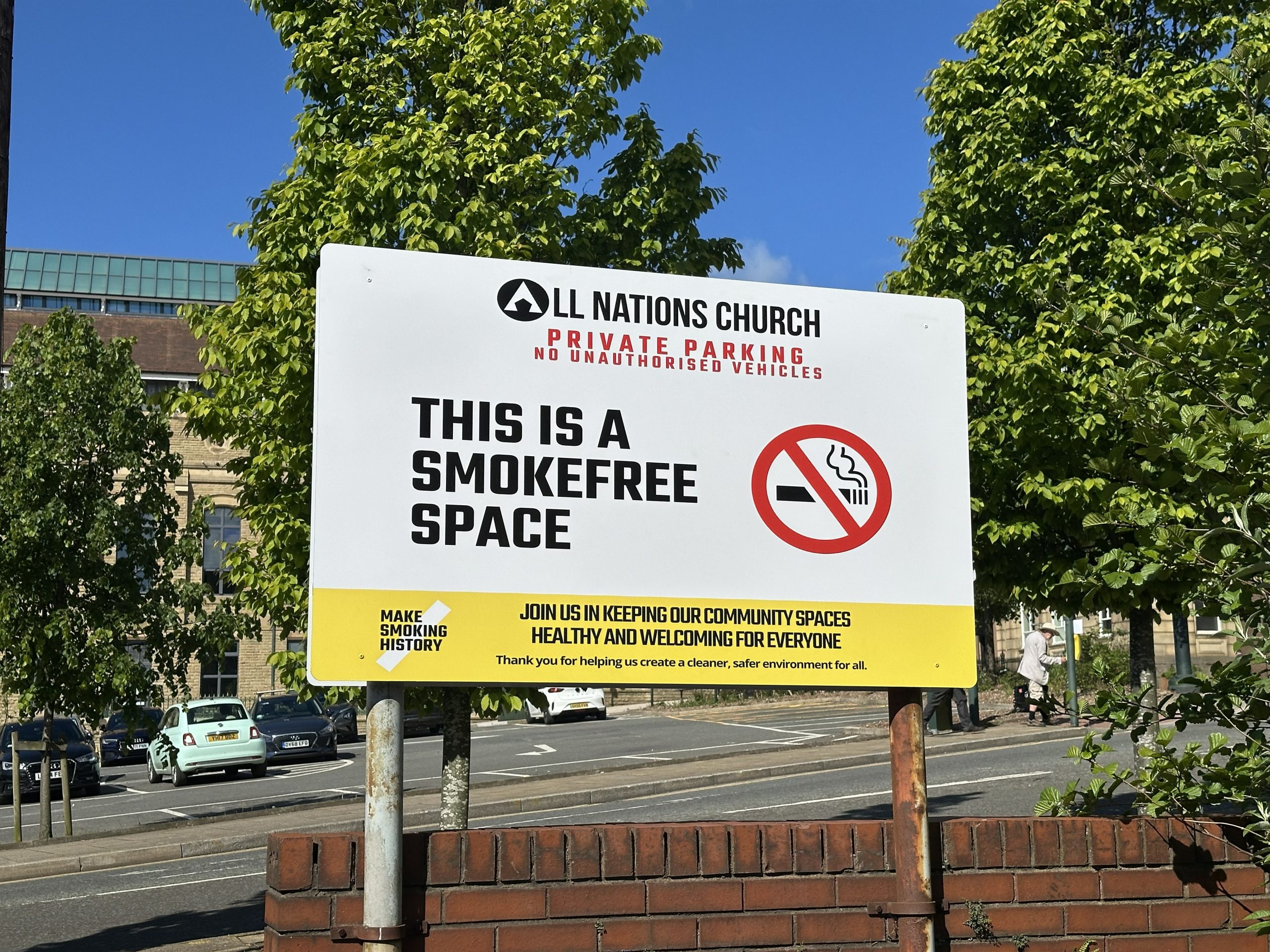
Across Greater Manchester there are already plenty of smokefree spaces, such as children’s play areas, parks and green spaces, hospital grounds, transport hubs (bus and tram stops), and areas within the immediate vicinity of schools and public buildings.
Smokefree spaces support the community in four main ways:
- Show younger generations that smoking is no longer the norm – and stop them from ever starting to smoke
- Create healthier environments for everyone to enjoy without having to breathe in second-hand smoke
- Help reduce cigarette litter and waste, which is toxic to our environment, waterways, and wildlife
- Support people who are trying to quit smoking to stay smokefree
Introducing the Greater Manchester Smokefree Spaces Toolkit
To support the creation of more smokefree spaces across the city region, Making Smoking History has worked together with eight voluntary, community, faith, and social enterprise (VCFSE) organisations to co-create, test, and evaluate a new Greater Manchester Smokefree Spaces Toolkit.
The toolkit provides practical guidance and resources for organisations that want to introduce or strengthen smokefree outdoor spaces.
Who is the toolkit for?
The toolkit has been developed to support a wide range of organisations and settings that have a role in creating healthier, cleaner environments for their communities.
Whether you are a local authority, NHS organisation, school, college, university, community or voluntary organisation, employer, housing provider, leisure or cultural venue, or responsible for managing public spaces and town centres, the toolkit provides practical guidance to help you introduce, promote and sustain smokefree outdoor spaces.
Designed to be flexible and easy to use, it enables organisations of all sizes to take positive action that supports public health, protects the environment and contributes to Greater Manchester’s ambition to make smoking history.
What’s included?
The toolkit contains practical resources to help organisations plan, launch and promote smokefree spaces, including:
- Step-by-step implementation guidance
- Communication and engagement materials
- Signage templates and examples
- Evidence and case studies
- Guidance on community engagement
- Resources to support people who smoke to quit
Whether you’re creating a new smokefree space or enhancing an existing one, the toolkit provides everything you need to get started.
Hear from some of our pilot organisations about the benefits they’ve noticed since becoming a smokefree space.
Download the toolkit
Ready to create a smokefree space?
Download the Greater Manchester Smokefree Spaces Toolkit and join the growing number of organisations helping to create healthier environments across our city-region.
The Greater Manchester Smokefree Spaces Toolkit was developed as part of Greater Manchester’s collaboration with the Partnership for Healthy Cities – a global network of more than 70 cities committed to reducing the prevalence of noncommunicable diseases and injuries.
A community-led approach
In August 2022, Greater Manchester Integrated Care Partnership announced plans to create more smokefree spaces in Greater Manchester and launched a public consultation asking members of the public for their views and opinions to help shape the initiative. There was an incredible response to the consultation and all feedback has been taken into consideration when designing our plans. Download the report from the resources section below to find out more.
Get involved
If you represent an organisation, venue or community group and would like support to introduce a smokefree space, we would love to hear from you.
Together, we can create cleaner, healthier and more welcoming places for everyone and help make smoking history across Greater Manchester.
Frequently asked questions
Is second-hand smoke really a risk in outdoor spaces?
There is no safe level of exposure to second-hand smoke as even small amounts can be harmful to people’s health.
Second-hand smoke comes from the tip of a lit cigarette and the smoke that is breathed out by a smoker. Breathing in second-hand smoke, also known as passive smoking, can increase a person’s risk of getting the same diseases as smokers, including lung cancer and heart disease.
Breathing in second-hand smoke is especially harmful for children as they have less well-developed airways, lungs, and immune systems, and for adults living with respiratory illnesses like asthma, COPD and cystic fibrosis. Pregnant women that are exposed to second-hand smoke are at an increased risk of complications during pregnancy and birth.
How do cigarettes impact the environment?
Every step in the supply chain of tobacco causes devastating damage to our ecosystems – from farming and manufacturing tobacco to smoking and litter.
The cultivation of tobacco crops leads to pollution, soil degradation and deforestation which contributes to climate change and loss of biodiversity. Tobacco smoke also contributes to air pollution by releasing toxic chemicals into the atmosphere. But the biggest long-term harm to the environment comes from cigarette filters which are predominantly made of plastic
Not only is the plastic harmful to our environment, but they also release toxic residual chemicals from inside the used filter. These include arsenic and lead, which harms our environment and is poisonous to any wildlife that comes into contact with it.
It’s estimated 70 tonnes of cigarettes are discarded in Greater Manchester each year – littering our green spaces, streets, roadsides, waterways and drains with toxic chemicals.
I’m a local business/landowner and want my outdoor space to be smokefree
There are many benefits to businesses and landowners to make their outdoor spaces smokefree. To speak to a member of our team for advice and guidance, or to put your space forward to be made smokefree under our plans, please email [email protected]
Where can I get help to quit smoking?
Get free, personalised support to quit smoking from your Local Stop Smoking Service, GP or pharmacist. Or call the NHS Stop Smoking helpline free on 0300 123 1044. Greater Manchester residents can also get six months’ free access to the Smoke Free app (T&Cs apply).